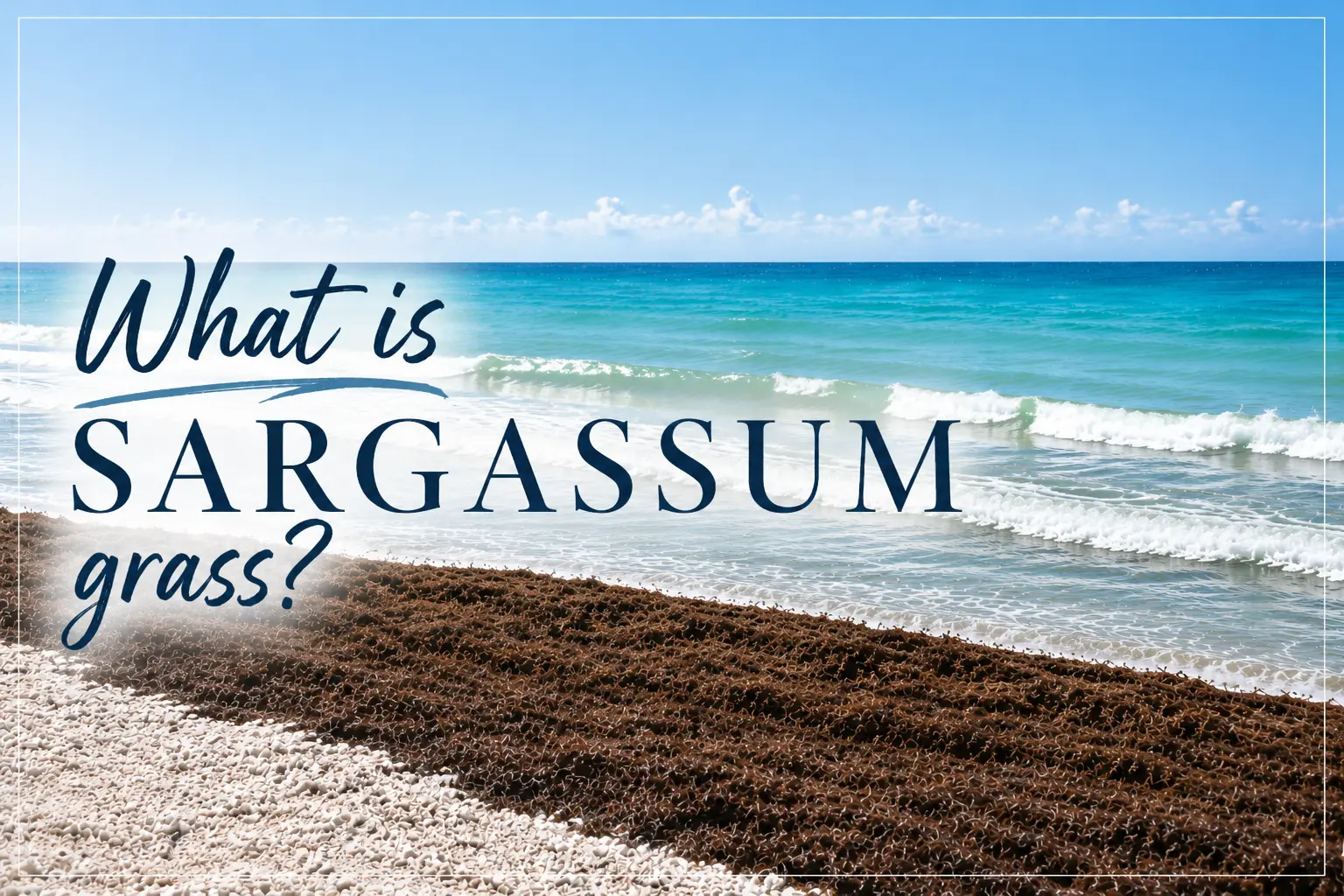
If you've spent any time on the beaches of 30A during June, you've probably noticed patches of brown seaweed washing ashore. It's called sargassum, and while it may not be as photogenic as our white sand and emerald water, it plays an important role in our coastal ecosystem.
Sargassum is a floating seaweed that drifts throughout the Atlantic Ocean, Caribbean, and Gulf of Mexico. Unlike most seaweed, it doesn't attach to the ocean floor. Instead, it forms large floating mats that serve as a nursery and shelter for countless marine species, including juvenile fish, crabs, shrimp, and even young sea turtles.
As currents and winds shift during late spring and summer, some of this sargassum makes its way onto our beaches. While large amounts can occasionally create odors and impact the beach experience, moderate amounts actually provide benefits by returning nutrients to the shoreline, supporting shorebirds and insects, and helping stabilize our dune systems.
Living on 30A since 1981 has taught me that nature often has a purpose that isn't immediately obvious. What may look like a nuisance is often an important part of a much larger and healthier ecosystem.
Check out the video below for a quick explanation of what sargassum is, why it arrives each summer, and why it's more important than most people realize.
Frequently Asked Questions About Sargassum on 30A
Why is sargassum washing up on 30A beaches?
Ocean currents, wind, and seasonal weather push sargassum onto 30A beaches, especially during late spring and summer.
Is sargassum harmful?
Sargassum is generally not harmful to people or pets. Large decomposing piles can smell unpleasant and may attract insects.
When is sargassum season on 30A?
Sargassum season on 30A typically runs from May through August, though the amount varies year to year.
Does sargassum affect swimming?
Usually, light to moderate sargassum does not impact swimming. Heavy buildup near shore can make beach access less enjoyable.
Why is sargassum important?
Sargassum supports fish, crabs, shrimp, sea turtles, and shorebirds, making it an important part of a healthy coastal ecosystem.